
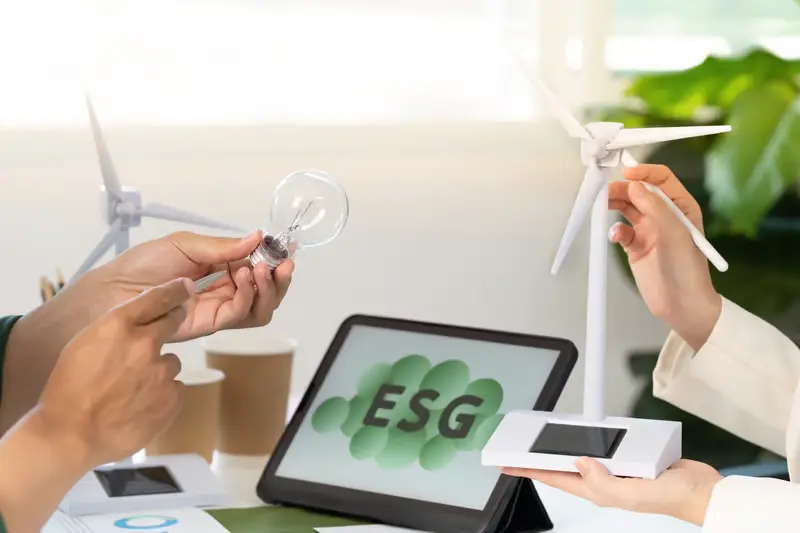
Business growth rarely happens evenly across every sector. Some industries expand because technology changes how people work. Others grow because governments invest in infrastructure, consumers change their habits, or businesses face new economic pressures. In 2026, these forces are creating opportunities across energy, artificial intelligence, healthcare, cybersecurity, and advanced manufacturing.
For entrepreneurs, investors, and business leaders, identifying the fastest growing industries 2026 is not simply about following popular headlines. It means understanding why demand is increasing, whether that demand can last, and which companies are positioned to turn it into sustainable revenue. A sector can attract enormous attention without offering attractive returns to every participant.
The strongest opportunities often appear where several trends overlap. Artificial intelligence requires computing infrastructure and reliable electricity. Clean energy needs storage, grid modernization, and skilled technicians. Healthcare faces rising demand for efficient services and better diagnostic tools. Understanding these connections helps businesses make decisions based on market fundamentals rather than excitement alone.
Why Industry Growth Is Accelerating in 2026
Several structural changes are reshaping the global business environment. Digital transformation is moving beyond basic software adoption. Companies now use automation, predictive analytics, cloud infrastructure, and AI-assisted systems to improve operations. At the same time, governments and private organizations are investing in energy security, resilient supply chains, and infrastructure modernization.
Demographic change is another important driver. Aging populations are increasing demand for healthcare, medical technology, assisted living, and specialized services. In developing economies, urbanization and expanding middle-income populations are supporting demand for housing, logistics, financial services, education, and consumer products.
Geopolitical uncertainty also influences investment decisions. Companies are reconsidering where they manufacture products, how they source critical materials, and how much dependence they should place on a small number of suppliers. This creates opportunities for regional manufacturing, industrial automation, logistics technology, and supply-chain software.
However, rapid growth does not automatically mean high profitability. Businesses must distinguish between expanding demand and attractive commercial opportunities. A sector may grow quickly while facing intense competition, expensive infrastructure, regulatory uncertainty, or declining prices. When evaluating the fastest growing industries 2026, decision-makers should examine customer demand, operating costs, barriers to entry, and the ability to generate recurring revenue.
Artificial Intelligence and Business Automation
Artificial intelligence remains one of the most influential business developments in 2026. Companies are moving beyond experimental chatbots and testing AI systems in customer service, software development, marketing, finance, manufacturing, and internal administration. The commercial opportunity is increasingly connected to measurable productivity improvements rather than technology demonstrations.
Generative AI helps businesses produce and summarize information, while machine learning supports forecasting, fraud detection, quality control, and personalized recommendations. AI agents are also attracting attention because they can perform connected tasks across digital workflows. For example, an enterprise system may use AI to review incoming requests, retrieve relevant information, prepare a response, and send the work for human approval.
The opportunity is not limited to large technology companies. Smaller businesses can adopt specialized AI tools for appointment management, customer communication, inventory forecasting, document processing, and sales support. Industry-specific solutions may offer stronger commercial value than general-purpose applications because they address problems with clear financial consequences.
Where AI Companies Can Find Sustainable Demand
The strongest business opportunities often involve solving a costly problem. A healthcare provider may need better administrative workflows. A manufacturer may want to reduce equipment downtime. A financial institution may require stronger fraud detection. In each case, AI becomes valuable when it improves an existing process and produces measurable results.
Businesses entering this market should focus on accuracy, security, integration, and accountability. AI systems can produce incorrect information, expose confidential data, or create operational risks if they are deployed without suitable controls. Companies also need to consider intellectual property, data permissions, and applicable regulations.
Competition is another challenge. Basic AI features can become widely available, making it difficult for businesses to maintain pricing power. Specialized knowledge, reliable proprietary data, strong customer relationships, and integration with existing systems can create more defensible positions. Among the fastest growing industries 2026, AI offers substantial potential, but the best opportunities are likely to come from useful applications rather than products built around hype.
Clean Energy and the Global Energy Transition
Clean energy is expanding because countries and businesses are responding to energy security concerns, emissions targets, changing technology costs, and rising electricity demand. Solar and wind power remain central to this transition, while battery storage, grid infrastructure, and energy management systems are becoming increasingly important.
The International Energy Agency’s electricity analysis highlights the growing role of renewables and other low-emissions sources in meeting global electricity demand. However, adding renewable generation is only one part of the challenge. Electricity systems also need transmission capacity, flexible storage, reliable backup, and modern grid management.
Solar, Wind, and Battery Storage Opportunities
Solar energy continues to attract investment because installations can serve homes, commercial buildings, industrial facilities, and large utility projects. Businesses can participate through panel manufacturing, installation, maintenance, financing, project development, and energy monitoring. The most attractive model depends heavily on local electricity prices, policy incentives, grid access, and financing costs.
Wind energy offers another major opportunity, particularly in regions with suitable land or offshore conditions. Yet project development can involve lengthy approvals, specialized equipment, environmental assessments, and complex construction. Businesses must evaluate local resource conditions and regulatory requirements before committing capital.
Battery storage addresses a different problem. Solar and wind generation do not always match the timing of electricity demand. Storage systems can capture electricity when supply is high and release it when demand increases or generation falls. This creates opportunities in battery production, installation, software, recycling, and grid-scale project management.
The clean energy transition also depends on the electricity network itself. Grid upgrades, smart meters, power electronics, and demand-management systems are essential for integrating more renewable capacity. For many companies, supplying the infrastructure around clean energy may offer a more practical entry point than competing directly in panel or battery manufacturing.
Healthcare, Biotechnology, and Digital Health
Healthcare is one of the most durable growth markets because demand is supported by demographic trends, chronic disease management, medical innovation, and rising expectations for accessible services. The sector includes hospitals and clinics, pharmaceutical development, diagnostics, medical devices, biotechnology, and digital health platforms.
Biotechnology is creating opportunities in advanced treatments, genetic research, biologic medicines, and precision medicine. These fields can address conditions that were previously difficult to treat. However, development costs are high, clinical trials take time, and regulatory approval is demanding. Investors and entrepreneurs should distinguish between promising research and products that have demonstrated safety, effectiveness, and commercial potential.
Digital health is expanding the ways people access medical services. Telehealth platforms, remote monitoring devices, electronic records, and AI-supported administrative tools can improve convenience and help healthcare providers manage workloads. Their success depends on patient trust, data protection, clinical integration, and evidence that they improve care rather than simply add another layer of software.
Business Opportunities in Preventive and Personalized Care
Preventive care and early diagnosis are receiving greater attention as healthcare systems seek to reduce avoidable complications and manage costs. Companies may find opportunities in screening services, diagnostic technology, patient education, health data management, and tools that help clinicians monitor long-term conditions.
Personalized medicine is another developing area. Genetic information, clinical history, and other patient data may help clinicians select treatments more precisely. However, these applications require careful oversight, strong privacy protections, and responsible interpretation. Businesses should avoid marketing medical claims that have not been supported by appropriate evidence.
Healthcare is among the fastest growing industries 2026 in terms of long-term structural demand, but it is not an easy market to enter. Regulation, professional licensing, reimbursement systems, and patient safety requirements can create significant barriers. Partnerships with established healthcare providers can help new companies understand these requirements and build credibility.
Semiconductors, Data Centers, and Cloud Infrastructure
Artificial intelligence depends on physical infrastructure. Every advanced model requires computing power, memory, networking equipment, cooling systems, and reliable electricity. This makes semiconductors and data centers important growth areas alongside AI software itself.
The semiconductor market is experiencing particularly strong demand from AI infrastructure. Gartner forecast global semiconductor revenue of approximately $1.6 trillion in 2026, driven in large part by memory products and AI-related investment. Its outlook also highlights growing demand for processors, networking chips, power management components, and high-bandwidth memory. These figures are forecasts, not guaranteed outcomes, but they demonstrate the scale of current investment expectations.
Data centers are benefiting from the expansion of cloud services, AI training, digital platforms, and enterprise computing. Their growth creates opportunities for construction firms, cooling specialists, electrical equipment suppliers, cybersecurity providers, and infrastructure operators. UNCTAD’s 2026 investment analysis identified data centers and semiconductors among the sectors attracting particularly strong greenfield investment announcements in 2025.
The Business Case Beyond Computing Hardware
Not every company needs to manufacture advanced chips or build enormous data centers to benefit. Smaller suppliers can serve specialized needs such as thermal management, power distribution, backup systems, equipment maintenance, and network monitoring. Software businesses can also provide tools for managing cloud costs, protecting infrastructure, and improving computing efficiency.
However, this sector requires careful financial analysis. Data centers involve large upfront investments, long development timelines, high electricity consumption, and dependence on suitable locations. Semiconductor manufacturing requires specialized expertise, expensive equipment, and complex supply chains. Businesses should assess customer commitments, access to power, equipment availability, financing costs, and realistic utilization rates before entering.
The fastest growing industries 2026 include many businesses supporting digital infrastructure rather than only the companies selling consumer technology. This distinction matters. Suppliers with specialized capabilities and long-term contracts may have a clearer path to predictable revenue than companies competing in crowded hardware markets.
Cybersecurity and Digital Risk Management
As businesses move more operations online, the consequences of cyberattacks become increasingly serious. Companies store customer information, financial records, intellectual property, and operational data across connected systems. A successful attack can interrupt services, create legal exposure, damage customer confidence, and generate substantial recovery costs.
This creates demand for identity management, endpoint protection, cloud security, threat detection, incident response, and employee security training. Businesses are also paying greater attention to third-party risk because an organization can be exposed through suppliers, software providers, and service partners.
Artificial intelligence adds another layer to the market. Security teams can use AI to identify unusual activity, organize alerts, and investigate potential threats more efficiently. At the same time, attackers can use automation to develop convincing phishing messages, test vulnerabilities, and scale certain attacks. Companies therefore need security systems that adapt as both defensive and offensive technologies change.
For entrepreneurs, specialized services can provide a more realistic entry point than building a complete cybersecurity platform. Small and medium-sized businesses often need security assessments, managed monitoring, backup planning, compliance support, and staff training. A provider that understands a specific industry and can explain risks in practical terms may build stronger customer relationships than one selling a generic technical package.
Advanced Manufacturing, Robotics, and Industrial Automation
Manufacturing is changing as companies seek higher productivity, greater supply-chain control, and more consistent product quality. Robotics, industrial sensors, machine vision, predictive maintenance, and connected production systems are helping factories improve operations. These technologies can reduce repetitive manual work, detect defects, and identify equipment problems before they cause expensive downtime.
Industrial automation is not limited to large automotive plants. Food processing, electronics, pharmaceuticals, packaging, agriculture, and warehouse operations can all benefit from specialized machinery and software. Smaller manufacturers may adopt automation gradually, beginning with one production line or a process where errors and labor costs are especially high.
Where Manufacturers Should Invest
The most effective automation projects begin with a clear operational problem. A factory might use machine vision to detect defective products, or sensors to monitor vibration and temperature in equipment. A warehouse may introduce autonomous mobile robots to move materials between work areas. In each case, the investment should be measured against productivity, quality, maintenance, and safety improvements.
Companies should avoid buying sophisticated equipment simply because competitors are doing so. Automation can create new costs involving installation, software integration, staff training, maintenance, and cybersecurity. Some processes are too variable or too small in scale to justify expensive machinery. A detailed return-on-investment assessment is essential.
Advanced manufacturing also creates opportunities for regional suppliers. Businesses that provide components, industrial software, repair services, technical training, and specialized equipment can benefit as factories modernize and supply chains become more diversified.
Electric Vehicles and Sustainable Transportation
Electric vehicles continue to reshape the automotive and transportation markets. Growth opportunities extend beyond vehicle assembly into batteries, charging infrastructure, power electronics, fleet software, maintenance, and battery recycling. Commercial fleets may be especially attractive because delivery companies, public transport operators, and businesses with predictable routes can evaluate operating costs across many vehicles.
The transition is not moving at the same speed everywhere. Adoption depends on vehicle prices, charging access, electricity costs, government policy, consumer confidence, and the availability of suitable models. Some markets are progressing quickly, while others face infrastructure gaps and affordability challenges.
This uneven development creates different business opportunities. A company in a city with growing electric vehicle adoption may find demand for workplace charging or fleet charging management. In another market, battery servicing, vehicle financing, or hybrid technology may offer a more practical opportunity.
Businesses should also examine the economics of battery materials and recycling. Batteries contain valuable materials, but recovery operations require technical expertise, safe handling, reliable supply, and a viable processing model. The long-term opportunity is connected to the volume of batteries entering use and eventually reaching the end of their service lives. The fastest growing industries 2026 are not necessarily the same in every country, so local infrastructure and customer readiness should guide investment.
Logistics, Supply Chain Technology, and Smart Commerce
Global trade and changing manufacturing strategies are increasing the need for efficient logistics. Businesses want better visibility into shipments, accurate inventory records, faster delivery, and fewer disruptions. This creates demand for warehouse automation, route optimization, supply-chain analytics, digital freight platforms, and temperature-controlled transportation.
E-commerce continues to influence logistics, but growth is not limited to online retail. Pharmaceutical distribution, food supply, industrial components, and international manufacturing all depend on reliable transportation and storage. Companies that can improve delivery accuracy or reduce wasted inventory may find opportunities across several industries.
Technology is changing how logistics providers operate. Predictive analytics can help estimate demand, while tracking systems provide more accurate information about shipment locations. Automated warehouses can improve picking and packing, although their financial value depends on order volume and operating costs.
For new businesses, specialized services may be more achievable than building a large transportation network. Inventory management software, last-mile delivery solutions, customs documentation tools, and cold-chain monitoring can address specific customer problems. The strongest business models solve measurable inefficiencies rather than simply adding another digital platform.
How to Evaluate the Best Business Opportunities in 2026
Identifying the fastest growing industries 2026 is only the first step. Entrepreneurs and investors need to determine whether a specific opportunity matches their resources, expertise, and risk tolerance. A rapidly expanding market can still be difficult to enter if customer acquisition costs are high or established competitors control distribution.
Start by examining the reason behind demand. Is growth supported by long-term structural change, such as rising electricity consumption or aging populations? Or does it depend mainly on temporary subsidies, speculative investment, or short-lived consumer interest? Structural demand generally offers a stronger foundation, although it does not guarantee that every business in the sector will succeed.
Next, study the customer. Identify who pays for the product, what problem it solves, and how frequently customers need the solution. A business selling essential maintenance services may generate more predictable revenue than one relying on occasional purchases. Recurring contracts, strong retention, and clear customer benefits can improve business stability.
Capital requirements also deserve close attention. Software services may be launched with relatively modest investment, while energy infrastructure, biotechnology, and semiconductor manufacturing can require substantial funding. Consider licensing, staffing, equipment, insurance, compliance, and working capital before committing money.
Geography can change the opportunity considerably. A market with strong renewable energy incentives may support solar installation companies, while a region with unreliable electricity may create demand for storage and backup power. Similarly, digital health services depend on healthcare regulations and reimbursement arrangements. Research local demand instead of assuming that global growth forecasts apply equally to every market.
A practical decision should combine market potential with execution ability. Choose a sector where you understand the customer, can access the required skills, and have a realistic route to revenue. Testing a small service or pilot project before making a major investment can reveal whether customers are willing to pay. This approach is often more useful than making decisions based entirely on industry rankings.
Conclusion
The business landscape in 2026 is being shaped by technological progress, energy demand, demographic change, and the need for more resilient infrastructure. Artificial intelligence, clean energy, healthcare, semiconductors, cybersecurity, advanced manufacturing, electric transportation, and logistics all offer meaningful growth opportunities. Their commercial potential, however, varies by location, business model, competition, and investment requirements.
The fastest growing industries 2026 should be viewed as areas worth investigating, not automatic investment recommendations. Businesses that understand customer needs, manage operating costs, and respond to genuine market demand are better positioned to benefit from industry expansion. Instead of chasing every emerging trend, focus on one opportunity where your capabilities match a real problem. Sustainable growth comes from solving that problem consistently and profitably.